Green Decor
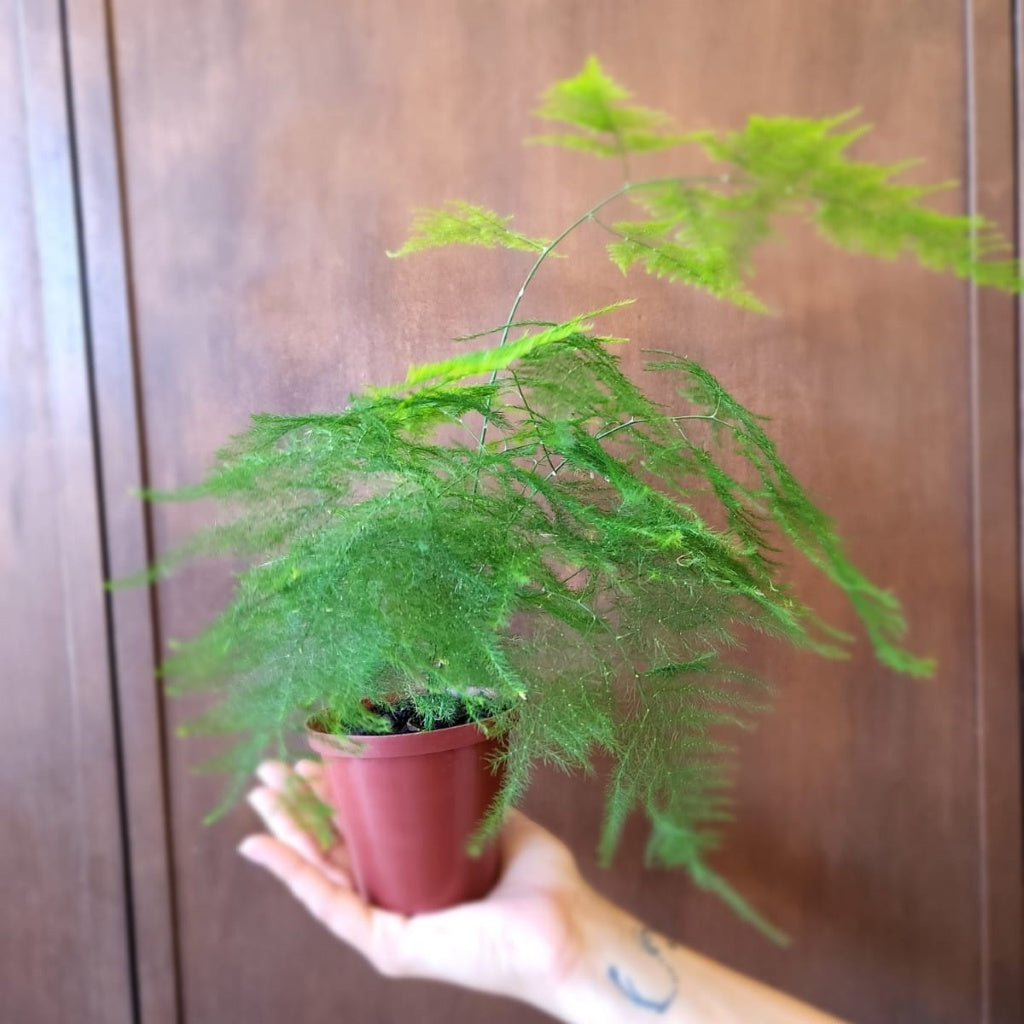
Asparagus plumosus 12cm AF
Asparagus plumosus 12cm AF
Couldn't load pickup availability
Asparagus plumosus, commonly known as the asparagus fern (Asparagus setaceus), is a popular houseplant and ornamental often used in floral arrangements. It is recognized for its delicate, feathery foliage. Despite its name, it is not a true fern but a member of the Asparagaceae (asparagus) family.
Key Characteristics
-
Foliage: Features fine, airy, fern-like leaves on long, wiry, climbing stems, creating a delicate appearance. The actual leaves are tiny scales, while the green "leaf-like" structures are modified stems called cladodes.
-
Habit: A fast-growing, evergreen perennial scrambler or climber that can reach several meters in length in its native habitat or with support. Indoors, it remains more compact and can be grown in hanging baskets or pots.
-
Flowers and Fruit: Produces small, inconspicuous white or greenish-white flowers, which may be followed by small, round berries that mature from green to black.
-
Toxicity: The berries (and possibly the plant itself) are toxic to humans and pets, including cats and dogs. Ingestion can cause gastrointestinal upset or dermatitis.
-
Thorns: Mature stems may develop small, sharp, barbed thorns, so handle the plant with care.
Care Guide
-
Light: Prefers bright, indirect light or light shade. Avoid intense, direct afternoon sun, as it can scorch the foliage.
-
Water: Keep the soil consistently moist but not waterlogged. The tuberous roots store water, making the plant somewhat drought-resistant, though it thrives best with regular moisture.
-
Humidity: Enjoys high humidity, making it ideal for bathrooms or grouping with other plants. Regular misting is also beneficial.
-
Soil: Requires a well-draining, fertile potting mix to prevent root rot.
-
Pruning: Remove any yellow or brown fronds at the base to maintain its appearance. Prune back leggy growth to encourage a bushier form.
Share